
Negotiations between Iran and the United States in Pakistan
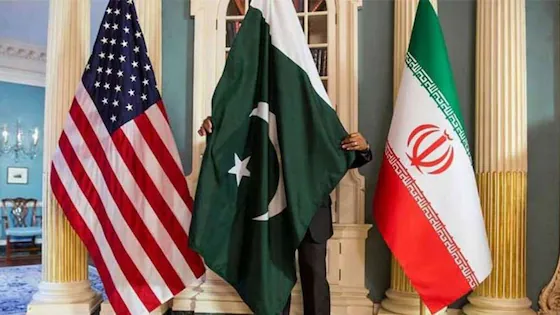
On Saturday, April 11, Islamabad, the capital of Pakistan, hosted important rounds of negotiations between senior officials from the U.S. and Iranian governments, including U.S. Vice President J.D. Vance; Iranian Parliament Speaker Mohammad Bagher Ghalibaf; and Iranian Foreign Minister Abbas Araghchi.
Despite past tensions, Pakistan currently maintains relatively good relations with both countries involved in the conflict and has emerged as a key intermediary between Washington and Tehran in recent weeks. The mediator shares a border of approximately 900 kilometers with Iran and is home to the world’s second-largest Shia Muslim population, second only to its neighbor, which increases its relevance to Tehran. Furthermore, unlike much of the Middle East, Pakistan has no U.S. military bases, which strengthens its credibility in the eyes of Iran. Pakistan’s involvement in the mediation efforts is also due to the energy security challenges posed by the conflict and the resulting rise in gasoline prices in the country, as well as growing internal instability, which is increasing pressure on Prime Minister Shehbaz Sharif’s government.
The United States and Iran maintain conflicting demands considered non-negotiable for reaching an agreement and insist on maximalist positions aimed at demonstrating their victory over the other, which has been stalling the progress of negotiations. For Trump, Iran must cease all uranium enrichment; dismantle its main nuclear enrichment facilities; end funding for armed groups such as Hamas, Hezbollah, and the Houthis; fully open the Strait of Hormuz and not charge tolls for passage, among other measures. Tehran, for its part, demands a ten-point peace proposal that involves Iranian supervision of the Strait of Hormuz; the withdrawal of U.S. combat forces from the Middle East; the suspension of military operations against allied armed groups, etc.
Another aspect of the tension involves Israeli airstrikes in Lebanon, which contribute to the hardening of U.S. and Iranian positions and undermine the negotiation process. According to Sarar Khan, a researcher at the Washington Institute for Global Affairs, a sustainable agreement will only be possible if Israel stops attacking, given that the country has already broken off previous negotiations by attacking Iran. Still, she stated that “Ultimately, it is up to the U.S.: to abandon the ceasefire and attack Iran, or to tell Israel to respect the ceasefire, under penalty of consequences.” Khan argues that Israel must actively participate in the rounds of negotiations, given its involvement and its level of interest in continuing the attacks: “Otherwise, they can always claim that the Israelis did not agree to the terms of any agreement.”
After 21 hours of negotiations, U.S. Vice President J.D. Vance announced on Sunday (April 12) that no agreement had been reached, casting doubt on the fragile two-week ceasefire between the countries. While Vance states that a “fundamental commitment” from Iran not to develop nuclear weapons is necessary, Tehran reaffirms that its nuclear enrichment program is exclusively for civilian purposes and that it is a signatory to the Treaty on the Non-Proliferation of Nuclear Weapons (NPT). The United States wants free passage through the Strait of Hormuz, while Iran insists on its sovereignty over the waterway, stating that all “non-hostile” ships may transit it.
There are no expectations that Iran will accept the U.S. terms anytime soon, as the delegation considers the conditions excessive and blames them for derailing the negotiations. Another factor reinforcing Iran’s resistance to the demands is the substantial influence the country believes it wields over the U.S. due to the current state of the Strait of Hormuz, which remains closed. The U.S. administration, on the other hand, believes that its adversary is already worn down after weeks of conflict and that it would be wise for Iran to accept the American conditions.
According to the spokesperson for Iran’s Ministry of Foreign Affairs, Esmaeil Baqaei, the delegations reached a consensus on some points, but other essential issues, such as the Strait of Hormuz, prevented definitive progress. In his view, given the context of mistrust and skepticism following 40 days of hostilities, it is natural for the negotiations to drag on. The talks held over the weekend of April 11–12 represented one of the most significant direct engagements between the U.S. and Iran, and a new round of negotiations in Pakistan is being discussed. It is possible that the delegations will reach a minimal understanding regarding the nuclear issue and the situation in the Strait of Hormuz, but the complexity of the impasses could considerably prolong the negotiations.
Despite the negotiations held last weekend in Islamabad, Monday (April 13) was marked by the start of the U.S. blockade of the Strait of Hormuz, in refusal of the toll imposed by Tehran on vessels wishing to transit through those waters. In a statement made on Sunday (12), hours after the talks in Pakistan failed to reach an effective agreement on the issue, President Donald Trump stated via the “Truth Social” platform that all vessels that submitted to the fee would be intercepted.
The operation, designed to prevent ships from entering and leaving Iranian ports in the Persian Gulf and the Gulf of Oman, was coordinated among three major U.S. military branches: the Coast Guard, the Navy, and the Air Force. The blockade applies exclusively to ports in Iran, with the rest of maritime traffic in the area continuing as normal.
The Coast Guard, which has police authority, would use fast patrol boats to establish more efficient initial contact with civilian vessels, facilitating the monitoring of shipping lanes and the detention of such vessels if necessary. The Navy, meanwhile, would serve as the central command of the operation, monitoring threats more precisely. Finally, the Air Force would conduct aerial surveillance of the Strait of Hormuz using drones and aircraft capable of further strengthening surveillance in the area.
The U.S. blockade comes amid difficulties in reaching a consensus regarding the ambitions involved in Iran’s nuclear program. In the face of growing tensions, the spokesperson for Iran’s Ministry of Foreign Affairs blames the U.S. for the unsatisfactory negotiations, citing the country’s “excessive demands and illegal requests.” In terms of legality, the U.S. claims that the operation would be authorized by international rules of war; however, Iranian officials claim that the restrictions are illegal and compare them to planned acts of “piracy,” threatening to implement “permanent mechanisms” of control in the Strait in response to the blockade.
Mistrust appears to be the central issue in this standoff, as argued by Sarar Khan of the Washington Institute for Global Affairs. Trump has been reiterating over the past few weeks Iran’s inability to keep its promises; according to the president, “Just as they promised, they had better start the process of making this international waterway open, and fast.”
As a result of the continued pressure, on Friday (the 17th), the Strait of Hormuz was finally “declared completely open” by Iran’s Foreign Minister, Abbas Araghchi, in light of the ceasefire agreement reached between Israel and Lebanon on Thursday, which is expected to last 10 days. Israeli bombings of Lebanon have undermined negotiations between the U.S. and Iran regarding navigation through the area, acting as an amplifier of tensions in the Middle East. Araghchi had even warned during the negotiations in Islamabad that Tehran could withdraw from the ceasefire agreement previously established with the U.S. if Israel continued its attacks on Lebanon, and that Israel’s absence from the talks would be an obstacle to reaching an agreement. However, the sense of hope created by the reopening of the Strait has an expiration date, as the opening is scheduled to last only until the end of the ceasefire period, which expires on April 22.
Although Iran has set a deadline for the reopening, the war of narratives continues, as Donald Trump appears to believe this is a permanent decision. On his “Truth Social” platform, he stated that “Iran has agreed never to close the Strait of Hormuz again. It will no longer be used as a weapon against the world!” Celebrations were limited to Iran’s stance, while Trump maintains his position regarding the naval blockade, which will only be lifted after the conclusion of negotiations with Iran for an effective peace agreement. The president also sought to reiterate the need to work together with Lebanon to address the issue of Hezbollah.
The reopening of this border crossing represents a positive step forward in the current situation in the Middle East, and particularly in relations between Israel and Lebanon, but disputes remain a reality. Both countries celebrated the truce, and Netanyahu argued that this moment would represent “an opportunity to reach a historic peace agreement.” Hezbollah, an armed group backed by Iran, has agreed to support the ceasefire provided there is “a complete suspension of attacks” on Lebanon. Iran, meanwhile, welcomed the initiative, expressing solidarity with Lebanon and insisting that its own ceasefire agreement with the U.S. and Israel include the Lebanese state, despite the refusals by U.S. Vice President J.D. Vance in Islamabad last weekend.
The central issue now involves the need to build trust among these countries in order to enable a long-term solution to the conflicts, alleviating not only military and civilian losses but also the ongoing global economic crisis caused by restrictions imposed on the passage of oil tankers through the Strait of Hormuz in recent weeks. Following the announcement of the reopening, the price of a barrel of Brent crude oil, which had been at $98 earlier in the day, fell to under $90, representing a drop of more than 10%. At the same time, the situation is likely to take a little longer to stabilize, as shipping companies prioritize the safety of their crews and, therefore, are expected to wait until the cessation of hostilities is guaranteed and not merely temporary.


Comments