
Bahrain’s Draft Resolution on the Middle East Crisis
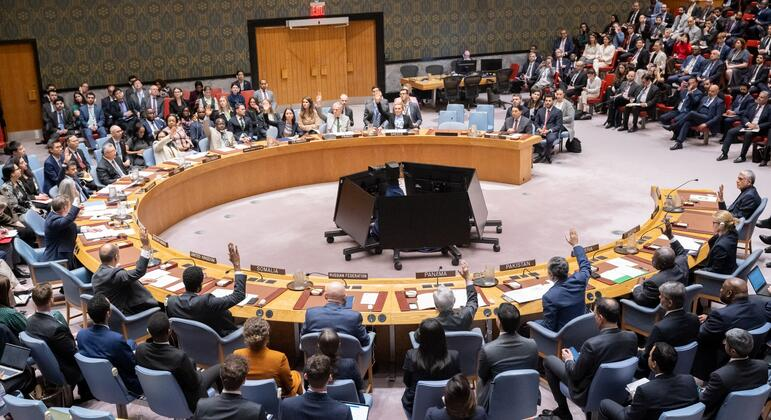
The escalating tensions in the Middle East stemming from the conflict between the U.S.-Israel alliance and the Iranian state have had a significant impact on discussions within the UN Security Council. In response to the U.S.-Israeli threat to its sovereignty and territorial integrity, Iran has consistently responded with retaliatory actions. In addition to choking off strategic points on the geopolitical map, such as the blockade of the Strait of Hormuz, attacks on U.S. bases located in other Middle Eastern states make resolving the problem an increasingly distant dream. As an alternative, the Security Council has turned to strengthening ties with regional organizations, backed by Chapter VIII of the Charter, recognizing their ability to understand the adversities faced more accurately.
Based on a presidential statement submitted by the representative of Bahrain at the April 2 meeting, the UN recognized the expertise of the Gulf Cooperation Council (GCC) as an entity capable of promoting sustainable peace and security in the region, in an effort to enhance cooperation with the regional organization, in a manner similar to that existing between the UN and the Arab League. The organization is of paramount importance for fostering greater stability in the region, not only because it serves as a coordination mechanism among these countries, aligning expectations regarding historical issues such as the Israeli-Palestinian conflict, but also because it functions as a pillar of the global economy, given that it comprises major global suppliers of gas and oil.
Cooperation between the GCC and the UN thus encourages a closer approach to addressing regional issues that threaten international peace and security. During the meeting in question, Abdullatif bin Rashid al Zayani, Bahrain’s Minister of Foreign Affairs, stated that he had submitted a resolution strongly condemning Iran’s unwarranted attempt to control an international shipping lane such as the Strait of Hormuz, through which 20% to 25% of the world’s oil passes. By undermining global economic stability through the obstruction of oil tankers, the decision provoked mixed reactions among Security Council members. While countries such as the United Kingdom blamed Iran for the escalation of tensions, Russia claimed that the conflict did not arise spontaneously, but as a result of aggression provoked by the U.S. and Israel against Iran, with support from China and Pakistan. Meanwhile, in response to Iran’s blockade of the strait, the U.S. representative stated that none of the GCC member states had ever closed their ports and waterways to U.S. ships.
In addition to the meeting regarding the establishment of institutional relations between the UN and the GCC, the Security Council highlighted the importance of strengthened and similar cooperation with the Arab League in the following session, also supported by Chapter VIII of the Charter. Given the humanitarian impacts and disruption of the global economy caused by the current overlapping conflicts in the Middle East, collaboration with the League would reinforce the need for international and regional coordination, with the aim of fostering greater political engagement and international accountability, as well as facilitating humanitarian support for the region’s most vulnerable countries. It was thus affirmed throughout the meeting that cooperation between the UNSC and the Arab League is not merely an option, but a necessity driven by the unstable nature of the Arab region.
At the Security Council, the French representative expressed outrage in response to Iranian attacks targeting its League partners. The positions taken by China and Russia during this second session emphasized the need to work in conjunction with regional organizations. Given the greater level of cultural, territorial, and political understanding demonstrated by the Arab League countries, a sense of complementarity has emerged between the UN and the League. While the former lends legitimacy to the actions of the states involved, the latter ensures ownership regarding the region’s economic, political, and social functioning. Thus, the development of common responses to the current crisis was treated as imperative to its resolution, given its cross-border nature.
Consequently, regional integration—both within the Gulf Cooperation Council and the Arab League, in alliance with the United Nations—would possess significant institutional power to ensure international peace and security, as the partnership would greatly enhance the prospects for preventive diplomacy, avoiding duplicative decisions that would instead be formulated jointly among the parties.
A draft resolution introduced by Bahrain in late March, voted on April 7, and supported by Arab countries and the United States, sought to authorize military action against Iran to reopen the Strait of Hormuz. With a stipulated duration of at least six months, the measure stipulates that the Security Council “authorizes Member States, acting individually or through voluntary multinational naval partnerships, upon prior notification to the Security Council,” to use all necessary means “to ensure transit passage and prevent attempts to close, obstruct, or otherwise interfere with international navigation through the Strait of Hormuz.” The draft underwent a series of revisions following weeks of closed-door negotiations, causing divisions both among the five permanent members—the United States, China, Russia, the United Kingdom, and France—as well as among the Council’s non-permanent members.
According to Ali Vaez, the Iranian director of the International Crisis Group, Bahrain’s proposal was “flawed” and “risked exacerbating tensions in the region,” arguing that the closure of the Strait is a result of the conflict and that it was open prior to the attacks. Bahrain has long maintained an antagonistic relationship with Iran, accusing it of interfering in its internal affairs and of fomenting dissent. Bahrain’s proposal met with expected opposition from Russia and China, but also a curious French veto. As permanent members of the Security Council, the three countries contributed decisively to the proposal’s failure on the grounds that they disagreed with any language that would permit the use of force in the sensitive situation of the conflict.
France, however, eventually relented after Bahrain revised the proposal again to give the text a more “defensive” tone and no longer explicitly invoke Chapter VII of the UN Charter, which allows the Security Council to “restore peace by force.” The latest version of the draft condemns Iranian attacks on ships and “strongly encourages the States” involved to “coordinate efforts, of a defensive nature and proportionate to the circumstances, to ensure the safety of navigation in the Strait of Hormuz, including by escorting merchant and commercial vessels.” The text demands that Iran “immediately cease all attacks against ships” transiting the waterway and “all attempts” to impede free navigation. Furthermore, the proposal states that the Council may “consider other measures” against those who compromise it.
The vote on the resolution took place on Tuesday, April 7, with eleven votes in favor, but it was rejected by the double veto of China and Russia, which maintained their opposition even after the revisions. In justifying the veto, Beijing stated that it is opposed to the use of force, and although it has adopted a neutral stance in the war, it also tends to show a pragmatic alignment with Tehran, from whom it is the main buyer of oil. The Chinese ambassador also explained that it would not be appropriate to approve the resolution on the same day that Donald Trump threatened to wipe out “an entire civilization” in Iran. The Russian ambassador, for his part, criticized the resolution for being one-sided, condemning only Iran’s attacks without mentioning violations by the U.S. and Israel.
Although France agreed to the final revised proposal, France’s alignment with Russia and China represented a significant shift in the Council’s diplomatic dynamics, as it is the first time in 23 years that Paris has joined Moscow and Beijing in opposing a resolution backed by the United States. The last time this occurred was in 2003 during deliberations regarding the Iraq War, when the three nations collectively challenged the U.S.-led intervention. The current rift has shifted the traditional 3-2 balance among the Council’s permanent members, in which France, the United Kingdom, and the U.S. typically align.
French President Emmanuel Macron explained that the decision was based on logistical and rational grounds. The president stated that the proposal was “unrealistic,” since “it would take an excessive amount of time and expose anyone crossing the strait to coastal threats from the Revolutionary Guard, which possesses significant resources, including ballistic missiles, as well as a host of other risks.” Furthermore, France reportedly rejected a request from the Trump administration to adopt a more militarily active stance in the Middle East conflict, opting instead for a more independent foreign policy focused on reducing tensions. Another aspect involves the deterioration of French relations with Israel, a rift that has led Paris to distance itself from the U.S.-Israel strategic bloc in the Middle East, seeking alternative diplomatic partnerships.
Finally, France’s diplomatic shift suggests a strategic choice by the country to align with Russia and China to protect its own interests. This development comes at a time when Donald Trump has signaled a possible review of the NATO alliance, even suggesting a potential withdrawal from the organization. Not only France, but also other Western allies have been seeking alternative partnerships in order to increase their autonomy vis-à-vis the United States in times of uncertainty and reduced confidence in Donald Trump’s political ambitions, which demonstrates a redefinition of strategies on the part of his allies.


Comments