
The United Arab Emirates' Withdrawal from OPEC and OPEC+ and Its Consequences for the Global Oil Market
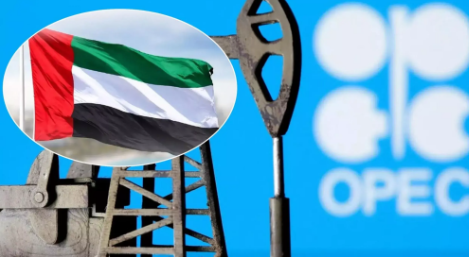
The United Arab Emirates officially withdrew from the Organization of the Petroleum Exporting Countries (OPEC) on May 1, 2026, after 60 years of membership. This move significantly impacted the group and represents a severe blow to the organization’s leader, Saudi Arabia, especially at this time, marked by international instability in global energy markets. Oil-exporting countries are facing the greatest supply crisis in history due to the U.S. and Israel’s war against Iran, which caused a historic energy shock and shook the global economy.
The United Arab Emirates announced its decision to leave OPEC and OPEC+ based on the defense of its “national interests.” This measure is grounded in a long-term strategic and economic vision, based on an agenda of “sovereign and strategic choice,” as outlined in the statement released by UAE state media. “During our time in the organization, we have made significant contributions and even greater sacrifices for the benefit of all (...). However, the time has come for us to focus our efforts on what our national interest demands,” the statement added. UAE officials have repeatedly indicated that the country’s interests are not aligned with production quotas, which limit its output despite major investments in expanding production capacity, as it seeks greater freedom in production.
The transition to low-carbon energy sources may also have influenced the UAE’s withdrawal. This can be explained by a scenario in which countries with high production capacity and greater tolerance for lower prices—such as the UAE—are expected to opt to abandon restrictions on oil extraction, prioritizing the exploitation of their reserves while demand still exists, before a possible decline in fossil fuel consumption.
As for OPEC—which for decades has worked collectively to use its combined oil production to influence global market prices—the United Arab Emirates’ sudden withdrawal is likely to weaken the group, given that the country ranks third in oil production within the organization. On the other hand, the decision to formally withdraw from the agreement may represent a victory for U.S. President Donald Trump, who continually accuses the organization of “exploiting the rest of the world” by artificially inflating oil prices and restricting global production.
OPEC was founded in Baghdad in September 1960 by Iran, Iraq, Kuwait, Saudi Arabia, and Venezuela. Its primary goal, initially, was to give oil-producing countries more control over prices and production. The organization aimed to unify oil policies, increase the power of producing countries, and combat the monopoly of Western multinationals, known as the “Seven Sisters,” which dominated global crude oil markets. The group’s influence has expanded in recent years, with OPEC aligning itself with 11 other oil-producing countries outside the cartel, led by Russia, in what became known as OPEC+.
The United Arab Emirates joined OPEC in 1967, first through the emirate of Abu Dhabi, and subsequently remained in the organization when the United Arab Emirates became an independent country in 1971. A statement from the UAE Ministry of Energy stated that leaving OPEC would provide the country with greater flexibility to respond to a “new era of energy,” in line with its “long-term strategic and economic vision.” Its withdrawal also exposed longstanding tensions between the UAE and Saudi Arabia, which have historically disagreed on the group’s approach to established oil production limits and international geopolitical issues.
Furthermore, the UAE and Saudi Arabia have increasingly rivaled each other on regional economic and political issues, particularly in the Red Sea region. Although the two countries had previously joined forces in a coalition to combat Iran-backed Houthi rebels in Yemen in 2015, tensions have persisted since then, when the coalition fell apart amid mutual accusations late that year. Saudi Arabia, for its part, bombed what it described as a shipment of weapons destined for Yemeni separatists supported by the United Arab Emirates.
OPEC members together control about 80% of the world’s proven oil reserves, but produce only 40% of global crude oil. This strategy is adopted to influence the market, keeping prices at a level that can sustain the economies of oil-producing countries. By limiting production, these countries avoid an oversupply, which would drive prices down, and manage to keep oil at a higher and more stable price, ensuring sufficient revenue to sustain their economies. However, the intensification of conflicts in the Middle East has exacerbated existing geopolitical tensions among member states. Anwar Gargash, a diplomatic advisor to the president of the United Arab Emirates, criticized Arab and Gulf states, accusing them of passivity in the face of Iranian attacks, during a session of the Gulf Influencers Forum on Monday.
Jorge León of Rystad Energy noted that the United Arab Emirates’ withdrawal represents a significant change for OPEC, since the country, alongside Saudi Arabia, is one of the few members with significant spare capacity — that is, when a country intentionally produces below its capacity — representing a key element of the group’s influence in the market, due to its control over prices and the availability of oil on the market. According to León, while the immediate impacts may be mitigated by tensions in the Strait of Hormuz, the long-term consequences point to a structurally weaker OPEC. He also highlights that the loss of a member capable of producing around 4.8 million barrels per day—and with ambitions to expand that production—deprives the group of an important strategic tool.
The UAE’s exit triggers an institutional dilemma without recent precedent in OPEC: how to maintain the group’s cohesion and its ability to influence the market with one fewer member—and not just any member, but one of the few with significant spare capacity to act as a stabilizer in times of crisis. Without the UAE’s barrels, OPEC’s share of the global market is expected to fall below 30% for the first time in its history, representing a historic decline in its influence compared to the more than half of global production the group controlled in the 1970s. The immediate expectation is that the remaining OPEC+ members will discuss the implications of Abu Dhabi’s decision at their next ministerial meeting, scheduled for June 2026, at which time they are expected to renegotiate quotas and assess the impact of the loss on collective production discipline.
The organization’s short-term response, according to analysts, is not expected to be an immediate price war, but rather a period of greater volatility and “gradual adjustment,” as members monitor the UAE’s production behavior outside the agreement. Saudi Arabia, burdened with the responsibility of single-handedly sustaining price stability, loses one of the few shock absorbers the group still possessed, which places the country in a more vulnerable position, compelled to make greater concessions on its own production to compensate for the vacuum left by the Emiratis. There is also the risk of institutional contagion: if other dissatisfied members (such as those that have historically failed to meet quotas, like Iraq and Russia) interpret the UAE’s exit as a sign that the collective model no longer pays off, the fragmentation of OPEC+ could deepen considerably in the coming years.
The markets’ reaction to the UAE’s announcement was marked by ambiguity and volatility, reflecting the overlap of two contradictory factors: fears of long-term oversupply, with the UAE free to expand its production without quota restrictions, and the immediate risk premiums associated with the ongoing conflict in the Persian Gulf. Crude oil prices initially retreated amid concerns about oversupply, only to recover above $105 (WTI) and $112 (Brent), driven by risk premiums related to Iran. Implied volatility in Brent futures options also widened, with the market pricing in a broader range of scenarios for the second half of 2026, reflecting uncertainty about when the Strait of Hormuz will return to normal operations and the pace at which the UAE will expand its production following the withdrawal. Goldman Sachs has revised its Brent price projections for the fourth quarter of 2026 upward, raising the estimate by $10 to $90 per barrel, due to lower-than-expected production in the Persian Gulf and delays in the normalization of regional exports.
In the medium and long term, the consensus among analysts points to a structurally more unpredictable market. David Goldwyn, former U.S. State Department special envoy for energy affairs, warned of the “significant risk of greater volatility in oil prices” resulting from the decision, noting that, although the UAE’s withdrawal from OPEC does not preclude potential forms of informal cooperation in the future, the market will lose Saudi Arabia’s ability to set a floor on prices should demand weaken and a large supply surplus emerge. David Oxley, chief commodities economist at Capital Economics, added that the move could initially push prices down but make oil markets more unstable for decades, especially if other producers decide to follow the UAE’s example and abandon quota discipline in favor of maximizing market share.
The debate over OPEC’s benefits for global consumers is longstanding and remains far from a consensus. On the one hand, supporters of the organization argue that collective coordination of production, by preventing abrupt price collapses, has helped stabilize the market at critical moments, such as during the 2008 global financial crisis and the demand shock caused by the Covid-19 pandemic, when coordinated cuts prevented an even more severe collapse in prices. On the other hand, critics (including U.S. President Donald Trump, who accuses OPEC of “exploiting the rest of the world” by artificially inflating oil prices) maintain that the quota system primarily benefits exporting economies, to the detriment of importing countries and end consumers, who pay higher prices for fuel, transportation, and energy.
The UAE’s withdrawal reignites this debate, as it highlights the organization’s paradox: a weaker OPEC could mean more oil available on the market and, eventually, lower prices for global consumers; but it could also mean greater instability, with wider and less predictable price fluctuations, which equally harms households, businesses, and governments that depend on a relatively stable energy market to plan their budgets. Strategists at ING Bank assessed that the erosion of OPEC’s influence “should be beneficial for importers and consumers” in the long term, but note that, in the short term, the main determinant of prices will continue to be the evolution of the conflict in the Persian Gulf and the reopening of the Strait of Hormuz. Ultimately, the question of whether OPEC is beneficial to consumers depends fundamentally on the time horizon considered: in the very short term, its absence may exacerbate volatility; in the long term, a more fragmented and competitive market may favor consumers, especially in the context of a global energy transition in which demand for oil inevitably tends to decline.


Comments