
Taiwanese Opposition Leader Makes Unprecedented Visit to China
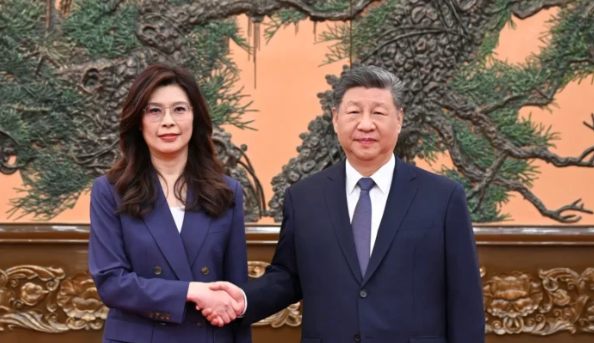
On April 10, 2026, the meeting between Xi Jinping, General Secretary of the Communist Party of China (CPC), and Cheng Li-wun, chairman of the Kuomintang (KMT) party, marked the first meeting between the two sides in a decade. The meeting aims to resume dialogue between the People’s Republic of China and Taiwan, as well as to discuss cooperation measures based on the 1992 Consensus—a political understanding that recognizes the “One China” principle, even though interpretations of the term differ—and to strengthen the anti-Taiwan independence narrative.
The visit represents an event of significant political and symbolic impact on relations between Taipei and Beijing. Against a backdrop of growing tensions in the Taiwan Strait, the meeting with Xi Jinping highlighted the possibility of diplomatic rapprochement between the two sides, signaling an attempt to reopen channels of communication amid the stalemate between the Taiwanese government and Chinese authorities.
The significance of the visit also lies in its rarity, as it marks the first trip by a sitting KMT president to the People’s Republic of China since 2016. By including Nanjing, Shanghai, and Beijing on her itinerary, Cheng sought to link the trip to the party’s own historical and ideological references, reinforcing a narrative of political continuity and the KMT’s historical legitimacy. Visits to Sun Yat-sen’s mausoleum, as well as meetings with high-ranking Chinese officials, highlighted the opposition leader’s attempt to project herself as a figure capable of reducing tensions across the Strait. However, it is worth emphasizing the importance of Cheng’s visit, especially given the current political situation in Taiwan.
In this sense, the rivalry between the Democratic Progressive Party (DPP) and the Kuomintang Party constitutes the main axis of Taiwanese politics today, reflecting substantially different visions for the island’s future. While the KMT advocates for the resumption of dialogue and closer relations with Beijing, promoting the idea of stability through economic and diplomatic cooperation, the DPP has established itself as a political force focused on asserting a distinct Taiwanese identity and maintaining greater political distance from mainland China. Since the DPP came to power in 2016, Beijing has intensified its diplomatic and military pressure on Taiwan, expanding military exercises and suspending official communication channels with Taipei.
Against this backdrop, Cheng’s visit took on a strong domestic dimension, being interpreted both as an attempt to promote peace and as an excessively conciliatory gesture in the face of Chinese pressure. In receiving Cheng, Xi Jinping projected an image of openness to negotiations, without necessarily abandoning the central premise that both sides belong to the same China. Thus, the preference for relatively moderate rhetoric, marked by strategic ambiguities, reveals China’s intention to preserve political space to influence the Taiwanese scene without provoking an immediate closure of channels.
The package of measures negotiated—focused on promoting exchanges between China and Taiwan and on cooperation—includes areas such as inter-party dialogue, infrastructure connectivity, trade facilitation, and cultural cooperation, and may have the effect of deepening relations between the parties. The adoption of these measures, however, depends on the agreement of the DPP, the party currently in power, which does not officially recognize the 1992 Consensus.
For Beijing, the visit holds strategic importance by projecting a harmonious image between China and the Taiwanese opposition leader, aiming to shift the focus away from arms cooperation between the U.S. government and the island. Beyond its international projection, the image signals the persistence of significant support for China, evidenced by a prominent political representative who considers accommodation with Beijing a viable option for Taiwan’s international relations.
The meeting, along with these measures, indicates the strengthening of domestic political actors with policies more favorable to dialogue with China, particularly within the KMT, straining defense-focused relations between the United States and Taiwan. Furthermore, the wider dissemination of China’s political ideals and interests regarding Taiwan could act as a catalyst against maintaining the island’s current status quo, which operates as a democracy with an autonomous government, despite being claimed by the People’s Republic of China as an integral part of its territory.


Comments